
Dry Brushing at Home Benefits Techniques and Wellness Tips

A few minutes with a simple dry body brush can make a shower feel more like a wellness ritual. The appeal is easy to understand: the practice is low-cost, quick, and calming, yet it can leave skin feeling smoother and the body feeling lighter.
Regular dry body brushing is often linked with better skin texture, lymph movement, reduced puffiness, and a more mindful start or end to the day. It will not replace sleep, nutrition, movement, or medical care, but it can sit neatly alongside them as part of a balanced home routine.
This guide explains how it works, what benefits are realistic, and how to do it safely.

What dry body brushing can do for overall wellness
The skin is the body’s largest organ, and it responds well to gentle, regular care. Brushing the body before bathing works mainly through mechanical exfoliation and light stimulation of the skin’s surface.
The benefits people notice most often include:
Smoother-feeling skin
A brighter appearance
Less visible dryness or flaking
A temporary feeling of lightness in heavy limbs
A calmer, more intentional start or end to the day
There is also a wellness link through the lymphatic system. Lymph helps carry waste products, immune cells, and fluid through the body. Unlike blood, lymph does not have a central pump. It moves with muscle activity, breathing, and body movement. Gentle brushing may encourage surface circulation and support the body’s natural flow, which is why many people connect it with support for the immune system.
That said, it is best to keep expectations grounded. The body’s main detox organs are the liver, kidneys, lungs, digestive system, and skin. Brushing does not “pull toxins out” in a dramatic way. It can support healthy routines that help the body function well.
Think of brushing as a supportive habit, not a cure. It works best when paired with hydration, movement, rest, and nourishing food.
How it may improve skin health
One of the clearest reasons to try dry brushing is skin texture. A natural-bristle brush helps remove dead skin cells that can make skin look dull or feel rough. This can be especially useful on areas such as the legs, arms, elbows, knees, and upper back.
When dead surface cells are lifted away, moisturiser can spread more evenly. Skin may feel softer after a shower, especially if you follow with a body oil, cream, or fragrance-free lotion while the skin is still slightly damp.
To protect the skin barrier, pressure matters. More force does not mean better results. The brush should feel gently stimulating, not scratchy or painful. Skin may look slightly pink afterwards, but it should not sting, burn, or stay red for long.
Avoid brushing over:
Cuts, bruises, or broken skin
Sunburn
Rashes or inflamed skin
Varicose veins that feel tender
Active eczema, psoriasis, or dermatitis flare-ups
Recent scars or areas after cosmetic treatment
If skin is sensitive, start with once a week and use the softest brush available.
How to brush in the right direction
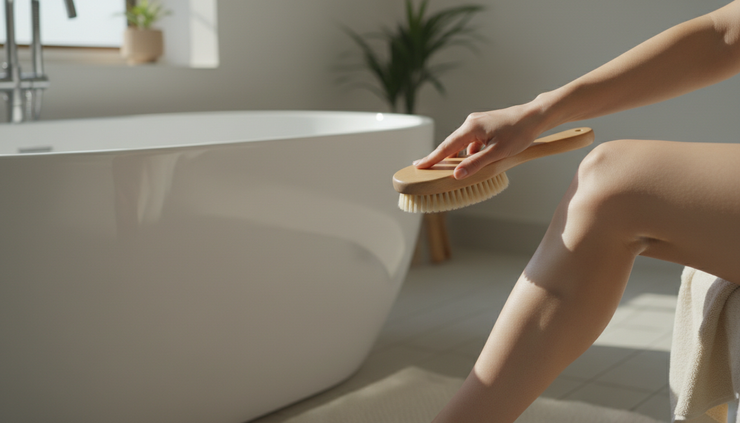
The common technique is to brush towards the heart, using light upward strokes on the limbs and gentle circular movements on the torso. This follows the general direction of lymph flow and keeps the routine easy to remember.
Here is a simple full-body method:
Start at the feet
Brush the soles, tops of the feet, and ankles. Use short, light strokes.
Move up the legs
Work from the calves to the thighs. Always move upwards.
Brush the hands and arms
Start at the hands, then brush towards the shoulders.
Use gentle circles on the stomach
Move in a clockwise direction, which follows the general path of digestion.
Brush the back
A long-handled brush makes this easier. Use upward strokes where possible.
Be careful on the chest and neck
Use very light pressure or skip these areas if they feel sensitive.
The whole routine should take around one to three minutes. After brushing, shower or bathe as usual to rinse away loosened skin cells. Finish with moisturiser to keep the skin comfortable.
How often to do it
For most people, two to three times a week is enough. Daily brushing can suit some skin types, but it is not necessary. If skin starts to feel dry, tight, itchy, or irritated, reduce the frequency.
A good weekly rhythm might look like this:
Routine style | Best for | Suggested frequency |
Gentle start | Sensitive or dry skin | Once weekly |
Balanced routine | Most skin types | Two to three times weekly |
Regular ritual | Experienced users with resilient skin | Up to daily if comfortable |
Morning is a popular time because brushing feels energising. Evening before bed can work too, especially if the routine is slow and gentle. The best time is the one that fits naturally into life.

The best tools for home use
A good brush should feel firm enough to exfoliate but soft enough not to scratch. Natural plant-based bristles are common, though softer synthetic options may suit reactive skin.
Look for:
A comfortable handle
Firm but flexible bristles
A long handle if reaching the back is difficult
A detachable head if storage space is limited
A brush that dries well between uses
Clean the brush regularly. Tap out loose skin cells after each use, then wash the bristles every month or two with warm water and mild soap. Rinse well and let it dry fully with the bristles facing down or in open air. Do not leave it sitting damp in the shower, as this can encourage mildew.
Replace the brush when the bristles become bent, rough, or unpleasant on the skin.
How it may help with fluid retention
The feeling of heavy legs or mild puffiness can come from sitting for long periods, standing all day, heat, hormonal changes, high salt intake, or poor sleep. Gentle brushing may help some people feel less sluggish because it wakes up the skin and encourages movement awareness.
For best results, pair brushing with habits that support circulation and fluid balance:
Drink water throughout the day
Take short walking breaks
Stretch the calves and ankles
Eat potassium-rich foods such as bananas, potatoes, beans, and leafy greens
Raise the legs for a few minutes after long periods of standing
Practise slow breathing to support relaxation
Persistent swelling, one-sided swelling, pain, heat, sudden puffiness, or breathlessness needs medical advice. Home rituals are not a substitute for care when symptoms are unusual or severe.

Make it part of a holistic routine
The easiest way to keep the habit is to attach it to something you already do. Place the brush near your towel, skincare, or dressing gown. Use it before a morning shower, after light stretching, or before an evening bath.
A simple wellness flow could look like this:
Brush for three minutes before bathing
Shower with warm, not hot, water
Apply body oil or lotion while skin is damp
Drink a glass of water
Take five slow breaths before starting the next part of the day
This turns a small act of skincare into a full-body reset. It gives you a moment to check in with your body, notice tension, and care for areas that often get ignored.
Dry body brushing works because it is simple. No complex equipment, no long routine, no special setting. Just a brush, a few spare minutes, and a gentle approach. Start once this week, keep the pressure light, and notice how your skin and body feel afterwards.


Comments